
Bali Infrastructure 2026: What’s Real vs. Hype for Investors
By Adrià Raduà, Co-founder · Azeroth Property Management · ~14 min read · Published July 2026
Key Takeaways
- Five Bali and Lombok infrastructure projects are confirmed funded and physically under construction in 2026: KEK Sanur, the Benoa marina, the PSEL Suwung waste-to-energy plant, the Pengambengan fishing port, and Mandalika’s circuit and bypass.
- Indonesia’s Transport Ministry officially shelved the greenfield North Bali Airport plan for Kubutambahan around 9-11 July 2026, redirecting focus to a smaller special-purpose airfield expansion (ANTARA, July 2026).
- The Gilimanuk-Mengwi toll road was cut from 96.84km to roughly 42km in June 2026, with no construction contract awarded and tender targeted for 2027, not already underway.
- The Bali LRT has had no confirmed physical excavation since its symbolic 2024 groundbreaking, despite some marketing sites describing active tunnel boring.
- Sanur-Serangan currently combines the most confirmed, simultaneous infrastructure of any Bali zone; north Buleleng carries the highest infrastructure-story risk following the airport cancellation.
- Listing portals price south Lombok land 60-70% below comparable south Bali product (US$215-500/m² prime Kuta-Mandalika), a market estimate that frames the island’s core value gap.
Bali’s infrastructure investment story in 2026 splits cleanly in two. Five projects across Bali and Lombok are funded and physically under construction. The three that generate the most headlines, the island-length toll road, the LRT, and a new international airport in the north, are rescoped, stalled, or officially cancelled. Knowing which list a project sits on matters more to a property investor than anything else in this market right now.
Most content written for foreign investors doesn’t make that distinction. A ministerial statement, a symbolic groundbreaking, and a signed construction contract all get described as “coming soon,” which flattens the risk picture in exactly the direction that favours the seller. This guide separates funded, physically-underway projects from proposals and stalled plans, then applies that distinction zone by zone. If you want the broader picture on yields and legal structures first, start with our complete Bali villa investment guide for 2026 and come back.
Which Bali and Lombok Infrastructure Projects Are Actually Funded and Underway in 2026?
Five projects have moved from announcement to signed contract or physical construction in the past 12 to 18 months. That’s the direct answer, and it’s a shorter list than most infrastructure roundups suggest.
KEK Sanur, Indonesia’s first health-sector special economic zone, has been operational since President Prabowo inaugurated it on 25 June 2025 (Indonesia.go.id, June 2025). Bali International Hospital, its anchor facility, has treated patients since 14 April 2025, with 255 beds and eight operating rooms (ANTARA, 2025). This is not a plan. It’s a functioning hospital with a patient record.
The Bali Maritime Tourism Hub, also known as Bali Gapura Marina, broke ground in Benoa on 22 May 2025, developed jointly by Pelindo and PT Marina Development Indonesia. It isn’t finished. A pilot commercial opening began in late 2025, and the full 180-berth build-out, including facilities for superyachts up to 90 metres, is targeted for Q3 2026 (Boat International, 2025). Under active phased construction is a meaningfully different claim from “completed,” and worth getting right.
The PSEL Suwung waste-to-energy plant in Pedungan, Denpasar, broke ground on 8 July 2026. Danantara Investment Management is funding the Rp3 trillion project, and PT PLN signed a power purchase agreement with the operating partner, PT Weiming Nusantara Bali New Energy, at the groundbreaking (ANTARA Bali; Bali Provincial Government, July 2026). It’s designed to process more than 500,000 tonnes of waste a year and is targeted for completion by the end of 2027.
PPN Pengambengan, a fishing port in Jembrana, has been under construction since November 2025 as a nationally-designated strategic project, with a budget of roughly Rp1.15 to 1.2 trillion and a completion target of 2028. It will absorb fishing vessels displaced from Benoa as that port converts to maritime tourism use.
In Lombok, the Mandalika circuit and the BIL-Mandalika bypass road are already operational, not proposed. The circuit hosted a record 140,324 spectators at MotoGP in October 2025, up 15.7% on 2024’s 121,252 (Kompas, October 2025). Infrastructure that already draws six-figure crowds needs no forecast.
Confirmed vs. proposed, in one table
| Project | Status | What confirms it |
|---|---|---|
| KEK Sanur | Operational | Inaugurated, hospital treating patients since Apr 2025 |
| Benoa Marina (BMTH) | Under construction, phased | Groundbreaking May 2025, pilot open, full rollout Q3 2026 |
| PSEL Suwung | Under construction | Groundbreaking Jul 2026, PPA signed with PLN |
| PPN Pengambengan | Under construction | PSN status, budget assigned, building since Nov 2025 |
| Mandalika circuit + bypass | Operational | Hosting events since 2022, record 2025 attendance |
| Gilimanuk-Mengwi toll road | Rescoped, no contract | Re-scoping only, tender targeted 2027 |
| Bali LRT / subway | Symbolic groundbreaking only | No confirmed excavation since Sept 2024 |
| North Bali Airport (greenfield) | Officially shelved | Minister confirmation, ~Jul 2026 |
Is the Bali Toll Road, the LRT, or the North Bali Airport Actually Happening?
The three most-searched Bali infrastructure stories also carry the least execution certainty right now. Several property-marketing sites describe all three as actively under construction. As of mid-2026, none of them is.
The Gilimanuk-Mengwi toll road was rescoped from 96.84km to approximately 42km (Pekutatan-Soka-Mengwi) in June 2026, confirmed by the Ministry of Public Works’ Komang Rasminiati (Kompas, 6 June 2026). The Gilimanuk-Pekutatan section was formally cancelled in February 2026 over low population density along that stretch (detikBali, February 2026). No construction contract has been awarded. The government’s own timeline targets a tender in 2027, not construction starting in 2026. Some investor-facing content still describes the full 96.84km route “moving forward,” or a re-tender implying imminent construction. The current official record supports neither claim.
The Bali LRT, sometimes marketed as a subway, had a symbolic groundbreaking in September 2024. Since then? No confirmed physical excavation or tunnel boring activity, and financing that remains entirely private with no visible progress. Some property-marketing content describes tunnel boring machines as “currently active” and a first phase “completing by 2028.” Neither claim is corroborated by verified reporting. Treat the LRT as speculative until an official government or Danantara announcement confirms physical construction.
The greenfield North Bali Airport, long planned for Kubutambahan in Buleleng, was officially shelved. Indonesia’s Transport Minister, Dudy Purwagandhi, confirmed the decision around 9-11 July 2026 in a meeting with Bali Governor Wayan Koster, stating that focus would shift entirely to the smaller Lt. Col. Wisnu Airfield in Buleleng (ANTARA, reported by Coconuts, July 2026). The project never obtained its location permit (IPL) despite years of political attention. If a listing or blog post still markets north Bali on the promise of an international greenfield airport, that promise no longer holds.
The Wisnu Airfield itself is a real but much smaller undertaking: a special-purpose facility for private jets, charter flights, cargo, and emergency diversions if Ngurah Rai is disrupted, not a commercial passenger hub (ANTARA, July 2026). Bali’s provincial government has created a state-owned enterprise (BUMD) and land-acquisition frameworks for it, and the Transport Ministry says execution will be opened to private investors. No confirmed budget or construction contract exists yet.
How Should Investors Weigh Certainty Against Upside?
Not every confirmed project offers the same opportunity, and not every proposed project deserves outright dismissal. The useful question is how certainty, timing, and price interact.
Infrastructure that’s already built and operational, like KEK Sanur, tends to have its value reflected in local prices. The risk is lowest here, but so is the remaining upside for a new buyer entering today. Infrastructure that’s funded and physically under construction sits in a different position: the outcome is largely de-risked, but the market often hasn’t fully repriced the surrounding area yet. Infrastructure that exists only as a proposal, feasibility study, or ministerial statement carries the highest potential upside if it eventually proceeds, and the highest risk of never materialising, or of arriving a decade later than marketed.
That’s the practical lens for everything below. Each zone is evaluated on where its supporting infrastructure sits on that spectrum, not on how much attention it gets in property marketing. Here’s the summary; every price level shown is an asking price from listing portals and agencies, so treat them as market estimates, not transaction data.
| Zone | Indicative asking prices* | Main catalyst | Signal to watch |
|---|---|---|---|
| Sanur-Serangan | Villas from ~US$250-350k | KEK Sanur (live) + Benoa marina | Kura Kura marina reaching full operation |
| Kuta Lombok / Mandalika | Land US$215-500/m² prime; 2-3BR villas US$200-500k | Circuit + bypass + airport (built) | NTB’s 6.5M-visitor target; new air routes |
| Selong Belanak | Land US$50-180/m² (Rp35-150M/are) | Same Mandalika infrastructure | Scarcity of flat ocean-view plots |
| Tabanan west | Land ~Rp450-975M/are | Toll tender 2027 + West Gatsu road | Toll contract award (entry) / cancellation (exit) |
| Jembrana | Among the lowest of coastal Bali | Pengambengan port (building) | Pekutatan-Soka toll section confirmed |
*Asking prices compiled from listing portals (Rumah123, 99.co) and agency-published ranges, July 2026. Market estimates, not closed-transaction data.
Sanur-Serangan: Bali’s Highest-Certainty Investment Zone in 2026

Sanur-Serangan combines more simultaneously confirmed infrastructure than any other zone in Bali in 2026. KEK Sanur is operational. The Benoa marina is under active phased construction a short distance away. A second Sanur port has been confirmed by authorities specifically to reduce congestion on the fast-boat route to Nusa Penida. The adjacent Kura Kura Bali special economic zone on Serangan island is in early development, with a deep-water marina planned.
Price today: Sanur is a mature, mid-to-upper market, with agency listings for villas typically starting around US$250,000 to US$350,000. That’s an asking-price range from agency-published listings, a market estimate rather than transaction data. It also tells you something useful: because the KEK is already live, a meaningful share of the price upside from this catalyst has likely been absorbed into those asking prices.
So the opportunity here is repositioning, not land banking. Existing villa stock in the area is a reasonable candidate for conversion toward medical-tourism and wellness long-stay demand, given the hospital’s proximity, and long-term rental to families or companions of patients. BIH is targeting roughly 240,000 patients a year at full capacity, expected around mid-2027, which is a demand pipeline the local rental market hasn’t priced yet in the way it has priced the real estate itself. The forward scenario: capital values move modestly from here, but long-stay rental demand keeps building through 2027. The threshold that would raise the ceiling is Kura Kura Bali reaching full operation, marina included; if that happens, Serangan-adjacent pricing gets a second catalyst. Sanur’s profile as a long-stay, family-oriented zone, which we cover in our definitive Bali zone guide, fits that demand shift well.
Kuta Lombok and Mandalika: Built Infrastructure at Emerging-Market Prices

Mandalika’s core infrastructure, the circuit, the BIL-Mandalika bypass, and the expanded Lombok International Airport, is already built and operating, not proposed. Hospitality investment has continued through 2025 and 2026, including branded openings such as Hyatt Saraya Bay. This is a case where the infrastructure risk is largely resolved but the surrounding real estate market is still priced as an emerging destination.
Price today, per portal and agency listings: prime land in Kuta and Mandalika at roughly US$215-500/m², managed 2-3 bedroom villas at US$200,000-500,000, and gross yields commonly quoted at 12-16%. In Selong Belanak, one bay west, listed land runs cheaper still, around US$50-180/m² (Rp35-150M per are). The same sources describe south Lombok pricing at a 60-70% discount to comparable south Bali product, with annual appreciation commonly quoted in the 10-22% range and Selong Belanak posting roughly +18% over a recent three-month stretch on Rumah123 medians. All of these figures come from listing portals and agency content, not from BPS or Bank Indonesia transaction data, and should be treated as market estimates rather than verified facts. The underlying infrastructure claim, that Mandalika’s circuit and bypass are real and operational, is independently verified. The pricing and yield claims layered on top of it are not.
The forward scenario follows from that gap. If Lombok’s demand indicators keep confirming, the quoted appreciation range has room to persist for years before south Lombok pricing converges with south Bali. The thresholds to watch: West Nusa Tenggara’s target of 6.5 million visitors, and announcements of new international air routes into Lombok International Airport. Each one that lands validates the trajectory; a stall in either is the early cooling signal. If neither materialises, you still own hard assets in a functioning destination with a MotoGP calendar, which is a very different downside than owning a promise.
At zone level, the realistic plays are land banking in less-developed pockets close to the circuit’s supporting infrastructure, blue-chip plots in Selong Belanak where flat land with ocean views is getting scarce, and managed villas in Kuta Lombok itself for cash flow. All suit investors comfortable with an earlier-stage market, and all demand the same legal diligence on foreign ownership structures that applies anywhere in Indonesia.
Tabanan West: A Narrow Window Before the 2027 Toll Road Tender
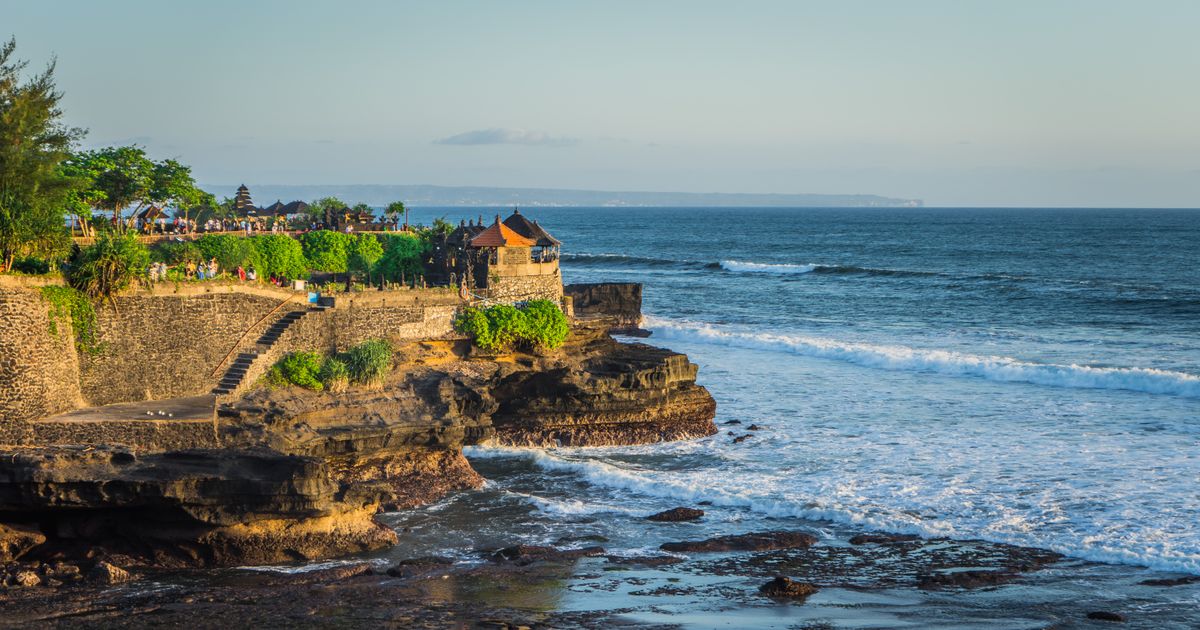
Tabanan west, covering Nyanyi, Kedungu, and Beraban, is a medium-certainty, high-upside zone, conditional on the 2027 toll tender actually proceeding. That conditionality belongs at the front of any decision, not the back.
What’s independently real: the West Gatot Subroto road, connecting Canggu, Mengwi, and Tanah Lot with a 375-metre underpass, has completed feasibility studies, with land acquisition underway through 2026. It doesn’t depend on the toll road. What’s still conditional: the surviving Pekutatan-Soka-Mengwi section of the Gilimanuk-Mengwi toll has no awarded construction contract, and the 2027 tender date is a government target, not a guarantee.
Price today: listed land in the corridor runs roughly Rp450-975 million per are, with Rumah123 medians around Rp9-10M/m² in Nyanyi (approaching Rp1 billion per are) and Rp6-7M/m² in Kedungu and around Tanah Lot. Agencies quote Kedungu at Rp700 million to Rp1.2 billion per are and Tanah Lot frontage at Rp1-2 billion per are. The same portal data describes a short-term correction, on the order of 8% to 25% over three months, following cumulative gains of 15% to 30% over roughly two years. All of these are asking prices from listing portals and agencies, not closed-transaction data; the correction figure in particular should be read as a market signal worth monitoring rather than a confirmed fact. If accurate, it points to a market cooling after a run-up rather than a collapse.
The forward scenario is the clearest binary on this list. If the toll contract is awarded in 2027, the corridor gets a funded, dated catalyst and the current correction will likely read, in hindsight, as the entry window; the market intelligence we’ve reviewed frames that window at roughly 12-24 months before the tender outcome starts repricing the zone. If the tender slips again or the western section is cancelled, the West Gatsu road alone still supports the “next Canggu” thesis, but at a slower pace, and the correction could deepen before it stabilises. Contract award is the buy-more signal. Cancellation is the exit signal. Everything before that is positioning.
For investors, the sensible structure here is conditional land banking in appropriately zoned areas, built around staged payments or options that account for the possibility the tender slips or the route changes again. The 2027 contract award, not the current re-scoping announcement, is the trigger.
Jembrana: Confirmed Infrastructure, Slower Payoff
Jembrana holds some of the most certain infrastructure in Bali right now. The Pengambengan fishing port is physically under construction, has national strategic project status, and carries an assigned budget. That’s a stronger execution signal than most zones on this list can claim.
But the payoff logic is different. This is industrial and fishing-sector infrastructure, not tourism-premium infrastructure. Price today: Jembrana’s coastal land is among the cheapest in Bali, per portal and agency listings, though local sources report prices already moving since the port broke ground. That figure profile is a market estimate, and precise per-are medians for this corridor are thin; what’s verifiable is the construction itself.
The realistic angle is opportunistic, low-cost land banking oriented toward logistics, cold storage, and workforce housing near the port and its eventual road interchange, rather than a villa-lifestyle thesis. The forward scenario runs on a five-to-ten-year horizon: the port alone supports steady, unglamorous appreciation from a very low base, and the threshold that would change the thesis materially is confirmation of the toll’s Pekutatan-Soka section, which would put Jembrana’s eastern edge at the start of Bali’s only expressway. Until then, this is patient capital territory.
Where Not to Buy in Bali on the Infrastructure Story Alone
North Bali, covering Buleleng, Kubutambahan, and Lovina, is the zone most exposed to infrastructure-story risk in 2026. The thesis this corridor was built on, a greenfield international airport, was officially shelved around 9-11 July 2026. That isn’t a delay to wait out. The ministry responsible has changed the plan.
What remains is the smaller Lt. Col. Wisnu Airfield expansion, a special-purpose facility for private and charter aviation, not a commercial hub, and without a confirmed construction budget or contract as of this writing. Our direct advice: any listing or agency content still marketing north Bali land on the promise of “the new international airport” deserves real skepticism until the Wisnu Airfield secures its own confirmed budget and construction contract. Buying ahead of a specific, funded catalyst is one thing. Buying ahead of a cancelled one that has simply been rebranded is another.
Frequently Asked Questions
Is the Bali LRT (subway) actually being built?
A symbolic groundbreaking took place in September 2024, but as of mid-2026 there is no confirmed physical excavation or tunnel boring activity. Financing remains 100% private with no visible construction progress. Treat any claim that tunnel boring machines are already active as unverified until an official government or Danantara source confirms it.
Is the North Bali Airport still happening?
The greenfield airport planned for Kubutambahan (Buleleng) was officially shelved by Indonesia’s Minister of Transportation, Dudy Purwagandhi, confirmed around 9-11 July 2026 (ANTARA, reported by Coconuts). Government focus has shifted to expanding the smaller Lt. Col. Wisnu Airfield in Buleleng for private jets, charter flights, and cargo, not commercial passenger traffic.
When will the Gilimanuk-Mengwi toll road open?
No construction contract has been awarded as of mid-2026. The route was rescoped from 96.84km to approximately 42km (Pekutatan-Soka-Mengwi) in June 2026, with the Gilimanuk-Pekutatan section officially cancelled in February 2026. The tender is targeted for 2027, with construction and any opening date beyond that. Treat earlier completion dates cited by property marketing sites as unconfirmed.
Which Bali zone has the most confirmed infrastructure right now?
Sanur-Serangan has the most simultaneously confirmed infrastructure of any Bali zone in 2026: KEK Sanur is operational with Bali International Hospital live since April 2025, the Benoa marina is under active phased construction, and a second Sanur port has been confirmed by authorities to ease congestion on the Nusa Penida route.
Is Lombok cheaper than Bali for comparable infrastructure access?
Multiple real estate listing portals and agency sources cite a significant price gap between south Lombok and south Bali, along with annual appreciation figures in the 10-22% range for parts of south Lombok. These figures originate from listing portals, not from BPS or Bank Indonesia transaction data, and should be treated as market estimates rather than verified facts.
How should I weigh infrastructure news before buying land or a villa in Bali?
Separate confirmed budget, signed contract, or physical groundbreaking from proposal or feasibility-study status. A ministerial statement of intent or a symbolic groundbreaking ceremony is not the same as funded construction. Projects with a signed PPA, awarded contract, or visible construction activity carry materially lower execution risk than those still in the planning or re-scoping phase.
Where This Leaves Investors
The infrastructure picture in Bali and Lombok for 2026 is more selective than either the bullish marketing narrative or a blanket skepticism would suggest. Five projects are genuinely funded and moving. Two of the most talked-about, the full-length toll road and the LRT, are not. One long-standing thesis, the north Bali greenfield airport, is now closed.
The most investable signal isn’t in the loudest headline. It’s in the zones where physical construction, signed contracts, and assigned budgets already exist, weighed against how much of that certainty the local market has priced in. Sanur-Serangan, Kuta Lombok, Tabanan west, and Jembrana each offer a different combination of certainty, timing, and upside. North Bali, for now, does not. And infrastructure certainty is only half the equation: what you buy still has to perform against a market where supply, yields, and legal structure decide the other half.
Sources (retrieved 12 July 2026)
- Indonesia.go.id (official government portal), “Peresmian KEK Sanur dan Bali International Hospital Perkuat Pariwisata Kesehatan di Indonesia,” June 2025 — indonesia.go.id
- ANTARA, “BIH KEK Sanur luncurkan operasi robotik di tahun pertama operasional,” 2025 — antaranews.com
- Boat International, “Bali Gapura Marina unveiled as Indonesia’s first international full-service marina,” 2025 — boatinternational.com
- ANTARA Bali, “Danantara mulai pembangunan PSEL di Denpasar,” July 2026 — bali.antaranews.com
- Pemerintah Provinsi Bali, “PSEL Ditarget Selesai Akhir 2027, Groundbreaking Denpasar Raya akan Dilaksanakan 8 Juli 2026” — baliprov.go.id
- Kompas, “Tol Gilimanuk-Mengwi Dipangkas Jadi 42 Kilometer,” 6 June 2026 — kompas.com
- Kompas, “Rekor Baru, 140.324 Penonton Padati MotoGP Indonesia 2025,” 6 October 2025 — otomotif.kompas.com
- Coconuts Bali, “Second Bali Airport shelved along with other infrastructure projects: Official,” July 2026 — coconuts.co
- ANTARA (English), “Govt eyes north Bali air hub through Lt. Col. Wisnu Airfield expansion,” July 2026 — en.antaranews.com
- Zone pricing and appreciation figures referenced as market estimates: Rumah123 and 99.co listing medians and agency-published ranges, as compiled in a July 2026 market intelligence review and cross-checked against live portal listing pages (Rumah123, 99.co, Lamudi) on 12 July 2026; asking prices, not transaction-verified.
Adrià Raduà — Co-founder, Azeroth Property Management. 20 years in property management, real estate investment, and hospitality across Spain, London, and Italy. All infrastructure facts in this article are drawn from official government sources, state news agencies, and named national press, cross-checked against primary reporting where available; figures sourced from real estate listing portals are explicitly labelled as market estimates. This article does not constitute investment advice.